

.webp&w=3840&q=75)
Les archives du Loiret
Les archives du Loiret
Key facts
Location
France, OrléansClient
Loiret Departmental Council
Delivery
July 2023
Contractor
Bouygues Bâtiment Centre Sud-Ouest
Architects
Wilmotte & Associés, Atelier des Mathurins, Gilbert Autret
A modern building, sustainable architecture
Located at the entrance to Orléans, the new building of the Loiret Departmental Archives is a major public facility dedicated to the preservation and promotion of written heritage.
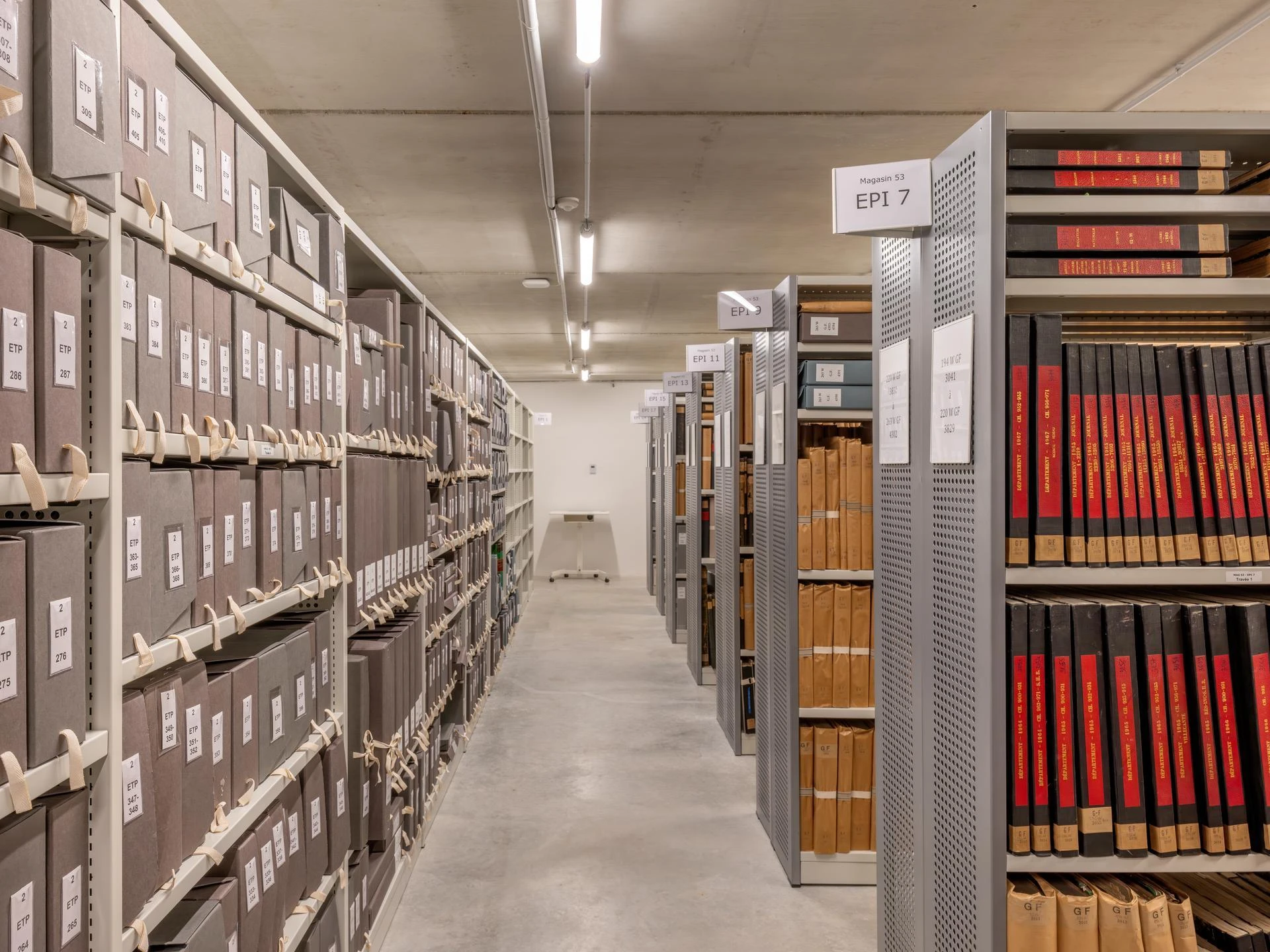
With nearly 32 linear kilometers of documents, maps, and photographs in storage, this building ensures optimal preservation conditions thanks to high-precision temperature and humidity control.
A true technical benchmark in its field. Constructed under a comprehensive performance-based contract, it meets high standards for sustainability, security, and scalability.
With a total floor area of approximately 12,000 m² spread across 8 levels, the building stands out for its silhouette composed of four towers, a striking urban landmark marking the city’s entrance.
Its interior layout clearly separates technical spaces, storage areas, and public reception areas to ensure the protection of the archives while facilitating their consultation.
Designed to accommodate new collections each year, the facility also includes land reserves for future expansion, thereby ensuring its longevity for decades to come.
.webp)
Key figures
- 12 000
- m² of floor space
- 2 600
- m² of outdoor space
- 8
- levels
- 32
- km of documents, photos, and maps
A bio-based building with high environmental performance
The project stands out for its ambitious environmental design, which combines low-carbon materials, a wood structure, and bio-based solutions. The towers are constructed of low-carbon concrete, while the main building volumes feature a wood frame insulated with natural fibers such as hemp, flax, and cotton. This construction approach achieves a high level of energy efficiency while ensuring the thermal inertia essential for archival preservation.
Certified BBCA and BiodiverCity®, the facility is part of a comprehensive strategy to reduce environmental impact and promote biodiversity. The landscaped outdoor spaces play an essential role in the site’s urban integration, creating a protective “green buffer” around the building through planted beds and vegetated swales.
Beyond its heritage function, the building thus embodies a new generation of sustainable public facilities, reconciling technical performance, architectural quality, and environmental responsibility.
Gallery
Do you have a project?
Let's discuss it.