
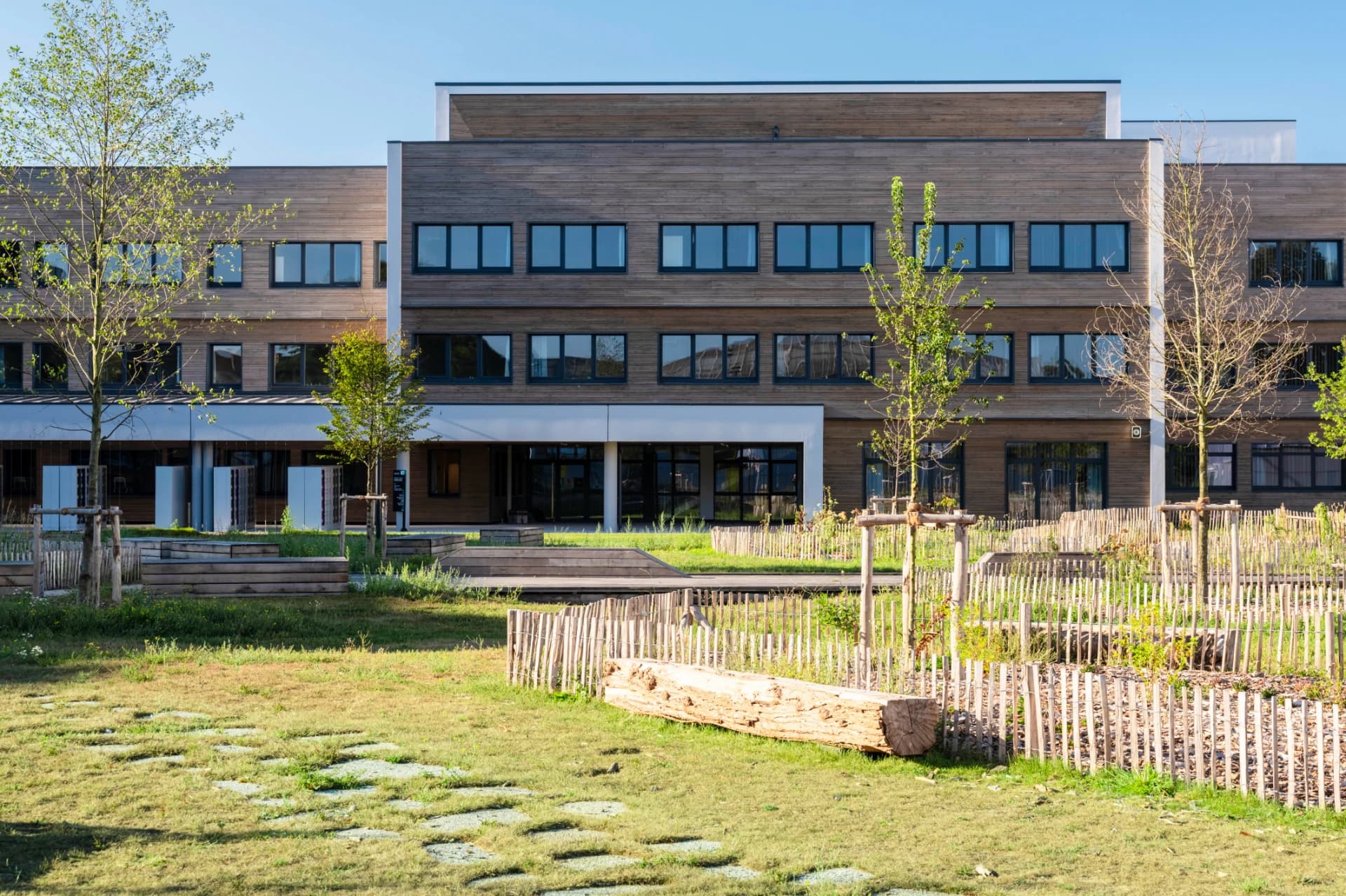
Jean-Marie Le Bris High School
Jean-Marie Le Bris High School
Key facts
Location
France, DouarnenezProject owner
Brittany region
Delegated project owner
SemBreizh
Architects
CRR Architecture, AUA BT
Contractor
Bouygues Bâtiment Grand Ouest
Restructuring of the school complex Jean-Marie Le Bris
The new complex, built on a total area of 6,645 m², is an extension of the middle school that was renovated in 2019 by Bouygues Bâtiment Grand Ouest's Brest-based teams.
After 19 months of renovation work, middle and high school students have been enjoying the following since September 2025:
- A brand new high school with classrooms, a library, and specialized facilities for the new audiovisual BTS program
- A shared school cafeteria (340 seats and 900 meals/day)
- A 55-bed boarding school
- 9,270 m² of green outdoor spaces
With an E3C1 rating, the building's bioclimatic and passive design demonstrates a commitment to high thermal performance: heating requirements are less than 15 kWh/m² per year, with a target of less than 3 kWh/m² per year.
Key figures
- 19
- months of work
- 931
- students
- 55
- boarding school beds
- 900
- meals per day
- 9 270
- m² of green outdoor spaces
A high school that restores nature to its rightful place
The Jean-Marie Le Bris high school is exemplary in terms of the environment: it is the first high school in France to be certified “Effinature,” High Ecological Value (HVE), taking into account the design, construction, and operation of the premises over four years, with a commitment to and monitoring of biodiversity as well as energy monitoring of the building.
The project includes an approach to reintroducing and developing biodiversity, which takes the form of:
- Preserving and compensating for existing biodiversity.
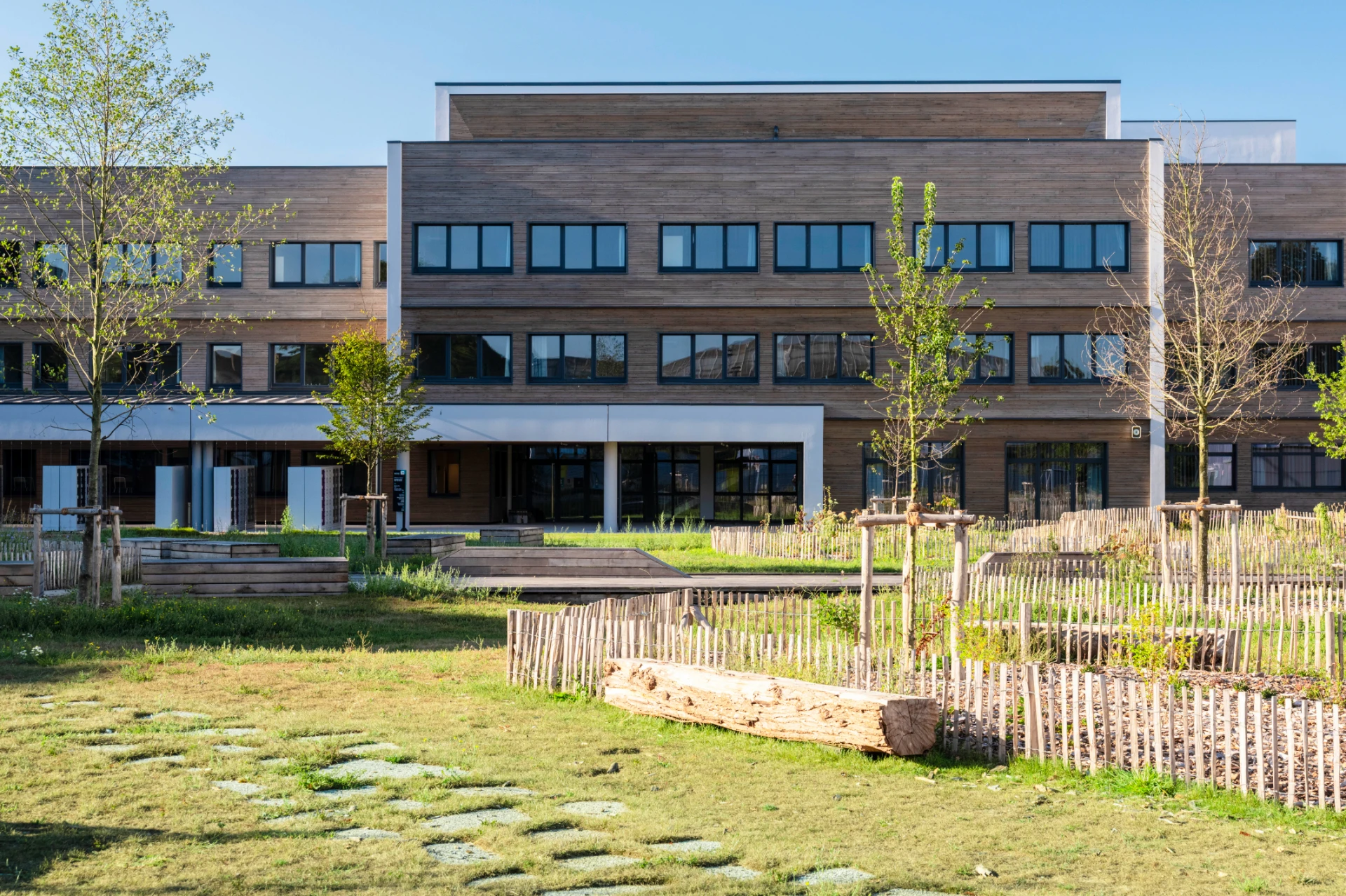
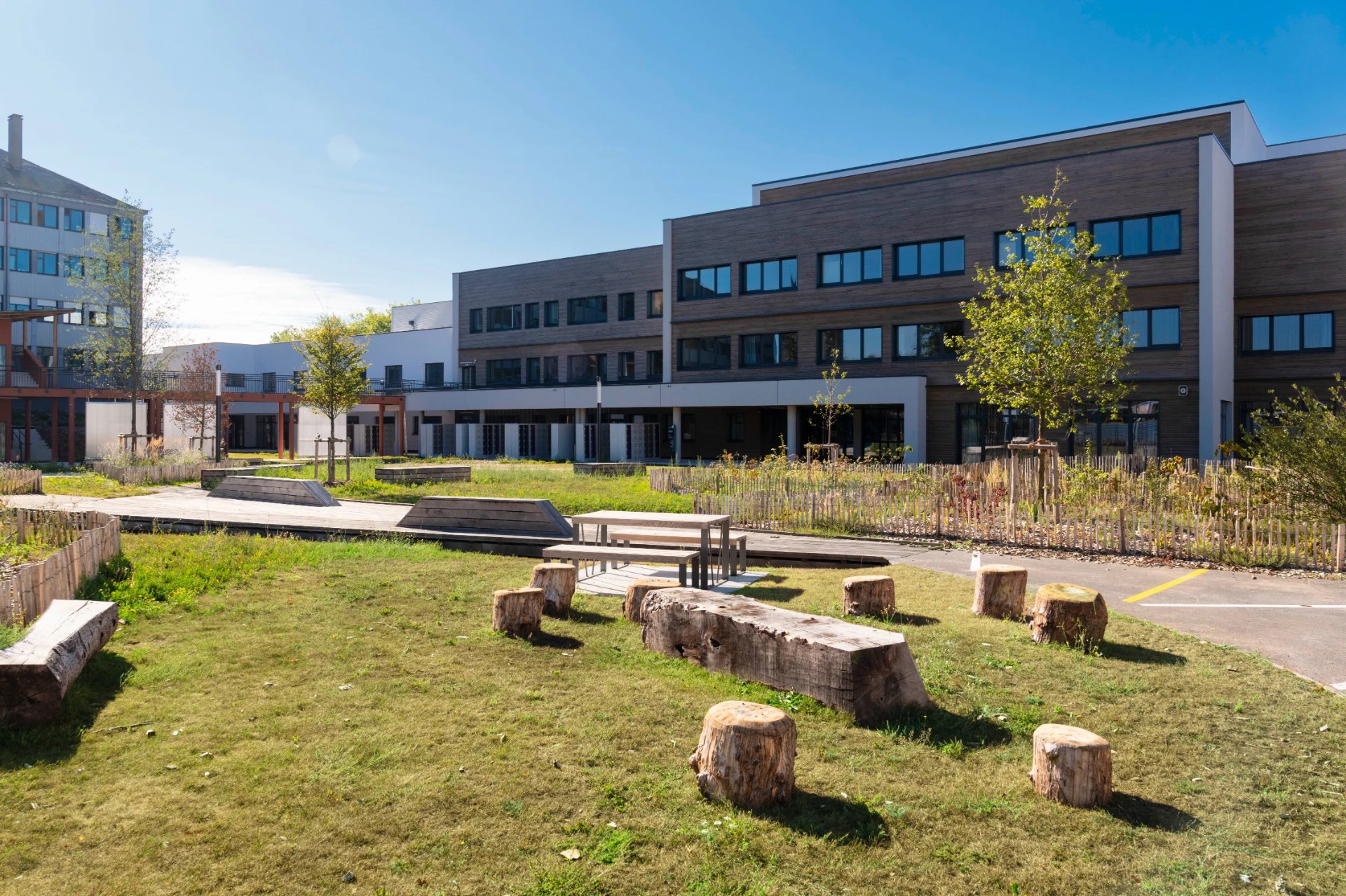
- Revegetation of the site: 60% of the land is developed into natural spaces with the creation of varied ecosystems such as mini-groves, landscaped swales, a pond, and unmaintained islands.
- 90% of the plants are local, water-efficient species and invasive species that have been cut down and transformed into outdoor furniture.
- The installation of 30 birdhouses and the neutralization of deadly traps for wildlife.
- The greening of roofs.
- Rainwater harvesting and no automatic watering of plants.
- Reuse of demolished materials, such as the asphalt crust from the courtyard, transformed into stepping stones or gabions, a refuge for small reptiles.
- Commitment to and monitoring of biodiversity over four years during the operational phase, with energy monitoring of the high school.
Gallery
Do you have a project?
Let's discuss it.