

Bourse de Commerce
Bourse de Commerce
Key facts
Location
France, ParisProject owner
Pinault Collection
Architects
Tadao Ando Architecte & Associates ; NeM Achitectes ; Agence Pierre-Antoine Gatier
Delivery
March 2020
Subsidiary
Bouygues Bâtiment Ile-de-France Rénovation Privée
Metamorphosis of a contemporary art showcase
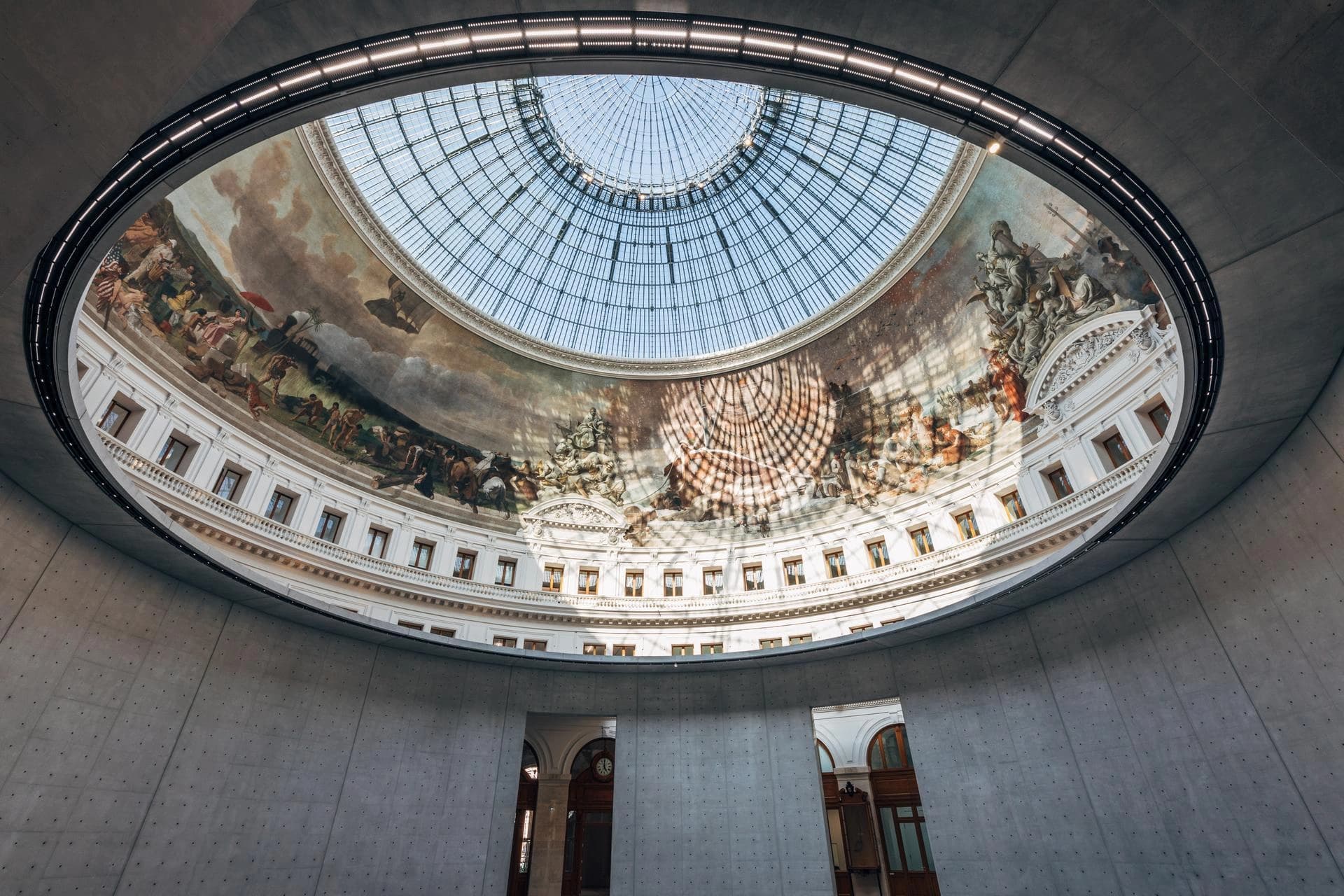
In the heart of Paris, this iconic 13,000 m² building has undergone a major transformation to become a museum dedicated to François Pinault's personal collection of contemporary art.
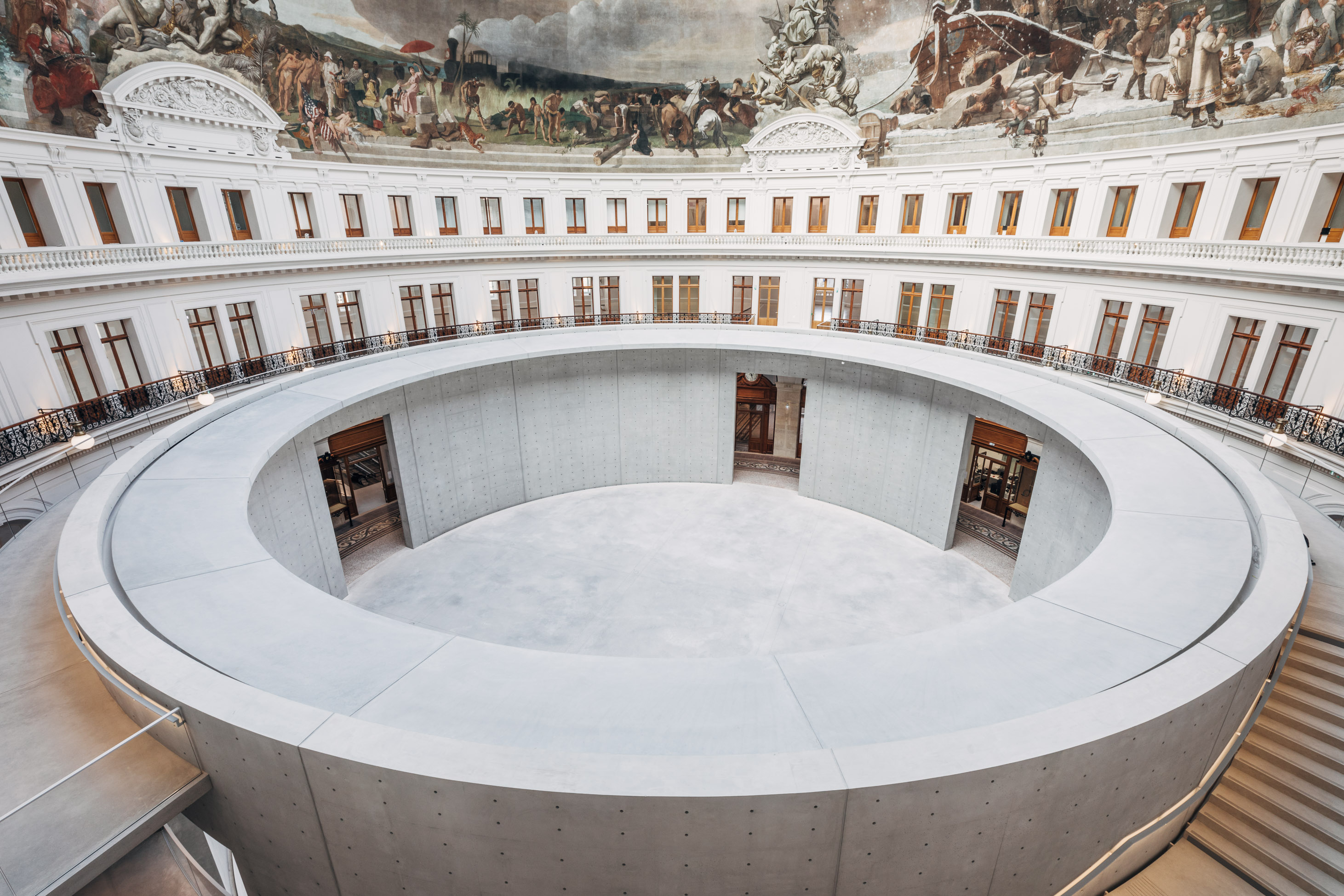
Designed as a place of experience as much as an exhibition space, the building now houses six exhibition rooms, office space, a terrace, and a panoramic restaurant on the third floor.
A third basement level has also been created to accommodate a 284-seat auditorium, reinforcing the site's cultural and event-hosting capabilities.
At the center of the rotunda is a striking architectural transformation by Tadao Ando: a nine-meter-high concrete cylinder, precisely inserted under the historic dome.
This contemporary intervention creates a striking dialogue between heritage and modernity, offering visitors a unique immersive experience within a monument steeped in history.
Key figures
- 6
- exhibition rooms
- 2 100
- m² of glass roof under the dome
- 44 0000
- slates
A technical challenge in the service of heritage
The transformation of the building required extensive structural reinforcement. In order to accommodate the concrete cylinder and monumental works, the structure was reinforced down to its deepest foundations. The floors, originally designed to support 250 kg/m², can now accommodate 700 kg/m², and up to 1,000 kg/m² in some places.
Carried out with respect for a partially listed building, the work combined technical prowess and craftsmanship. The 2,100 m² glass roof under the dome was completely restored, restoring the rotunda to its former glory. The roof has been restored to its 1889 appearance thanks to the meticulous replacement of 44,000 slates, laid one by one. No fewer than 11 different shapes were needed to fit the total curved surface area of 1,000 m².
A dozen craft companies, including decorators, sculptors, ironworkers, and stonemasons, worked under the direction of Pierre-Antoine Gatier, chief architect of Historic Monuments.
This major transformation has preserved the soul of the place while bringing it firmly into the 21st century.
.webp)
Gallery
Do you have a project?
Let's discuss it.