

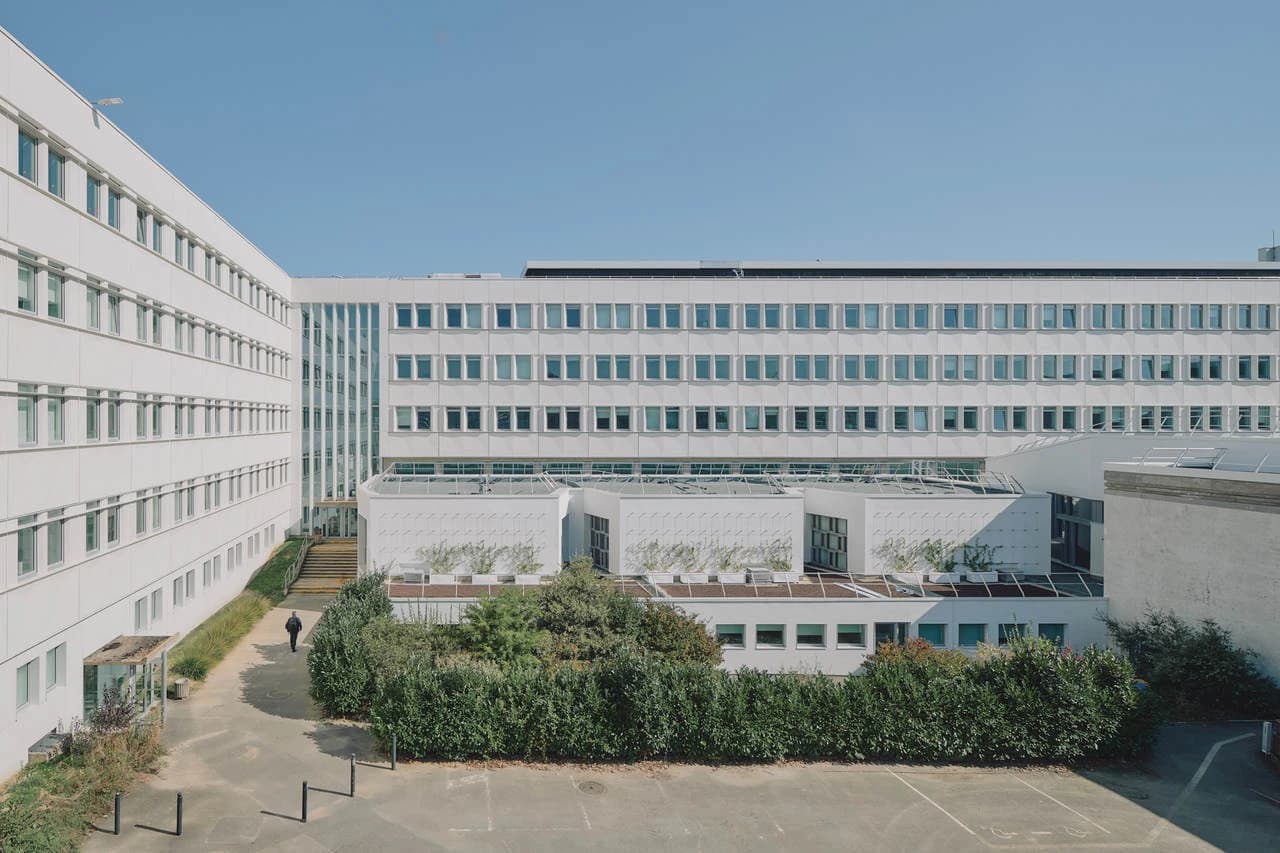
Rennes Campus 2030
Rennes Campus 2030
Key facts
Location
France, RennesProject owner
University of Rennes
Architect
ENIA Architectes
Contractor
Bouygues Bâtiment Grand Ouest
Devolution
Design and implementation
A renovation pilot project as a precursor
Faced with the need to radically reduce its energy consumption and improve the comfort of its occupants, the University of Rennes has developed a comprehensive plan for modernization and environmental, urban, and social transition, which will be implemented starting in 2019 through the Rennes Campus 2030 project.
This ambitious plan, spanning 15 years, involves the renovation of 100% of the university's real estate assets, representing 310,000 m² and 150 buildings.
To demonstrate the soundness of its model and plan, the university took advantage of the architectural consistency of its real estate portfolio—80% of which dates from the 1960s and 1970s—to develop a pilot renovation project involving 16 buildings, covering 70,000 m², spread across the Beaulieu, Villejean, and Centre campuses in Rennes. A framework agreement, broken down into subsequent contracts, was signed with a consortium led by Bouygues Bâtiment Grand Ouest to oversee the entire design and construction of this renovation pilot project.
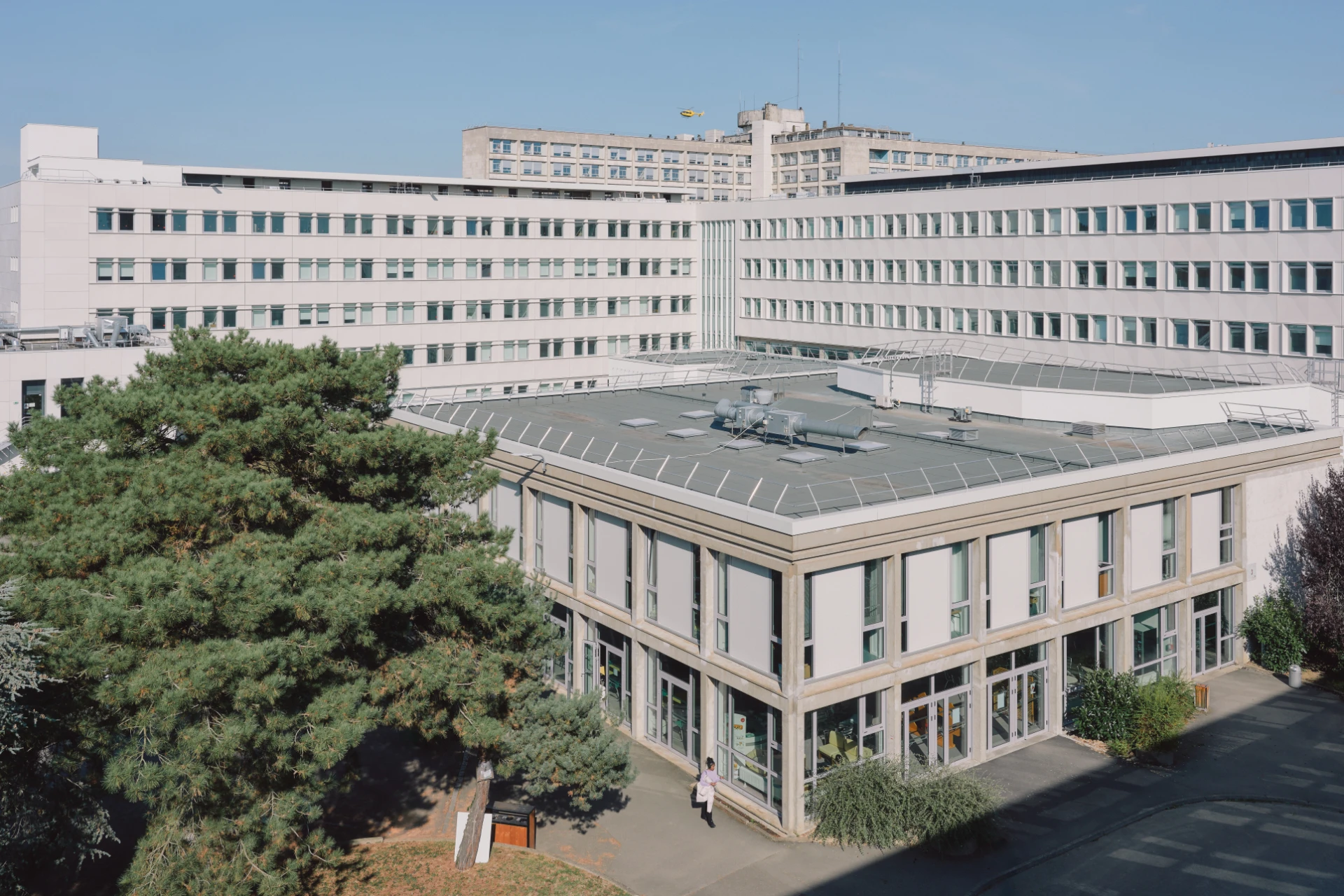
A renovation pilot project as a precursor
Faced with the need to radically reduce its energy consumption and improve the comfort of its occupants, the University of Rennes has developed a comprehensive plan for modernization and environmental, urban, and social transition, which will be implemented starting in 2019 through the Rennes Campus 2030 project.
This ambitious plan, spanning 15 years, involves the renovation of 100% of the university's real estate assets, representing 310,000 m² and 150 buildings.
To demonstrate the soundness of its model and plan, the university took advantage of the architectural consistency of its real estate portfolio—80% of which dates from the 1960s and 1970s—to develop a pilot renovation project involving 16 buildings, covering 70,000 m², spread across the Beaulieu, Villejean, and Centre campuses in Rennes. A framework agreement, broken down into subsequent contracts, was signed with a consortium led by Bouygues Bâtiment Grand Ouest to oversee the entire design and construction of this renovation pilot project.
Key figures
- 3
- renovated campuses
- 46
- months of work
- 29 000
- m² of renovated facades
- 15 900
- m² of renovated roofing
- 4080
- windows replaced
Massification of thermal renovation in occupied sites
The off-site construction process chosen enabled the Bouygues Bâtiment Grand Ouest teams to industrialize the work and optimize deadlines and quality.
An evolving, multi-faceted strategy was developed to address all the heritage, aesthetic, technical, and methodological challenges of this unprecedented project. The key: off-site construction. This process had already been adopted by Louis Arretche, enabling him to optimize construction and, despite the scale of the project, achieve overall consistency. Today, it is being used to enhance this remarkable architecture without disrupting the university's activities, enriching it with bespoke, highly refined and ultra-high-performance elements.
Three renovation strategies were implemented for the thermal rehabilitation of the Villejean Campus:
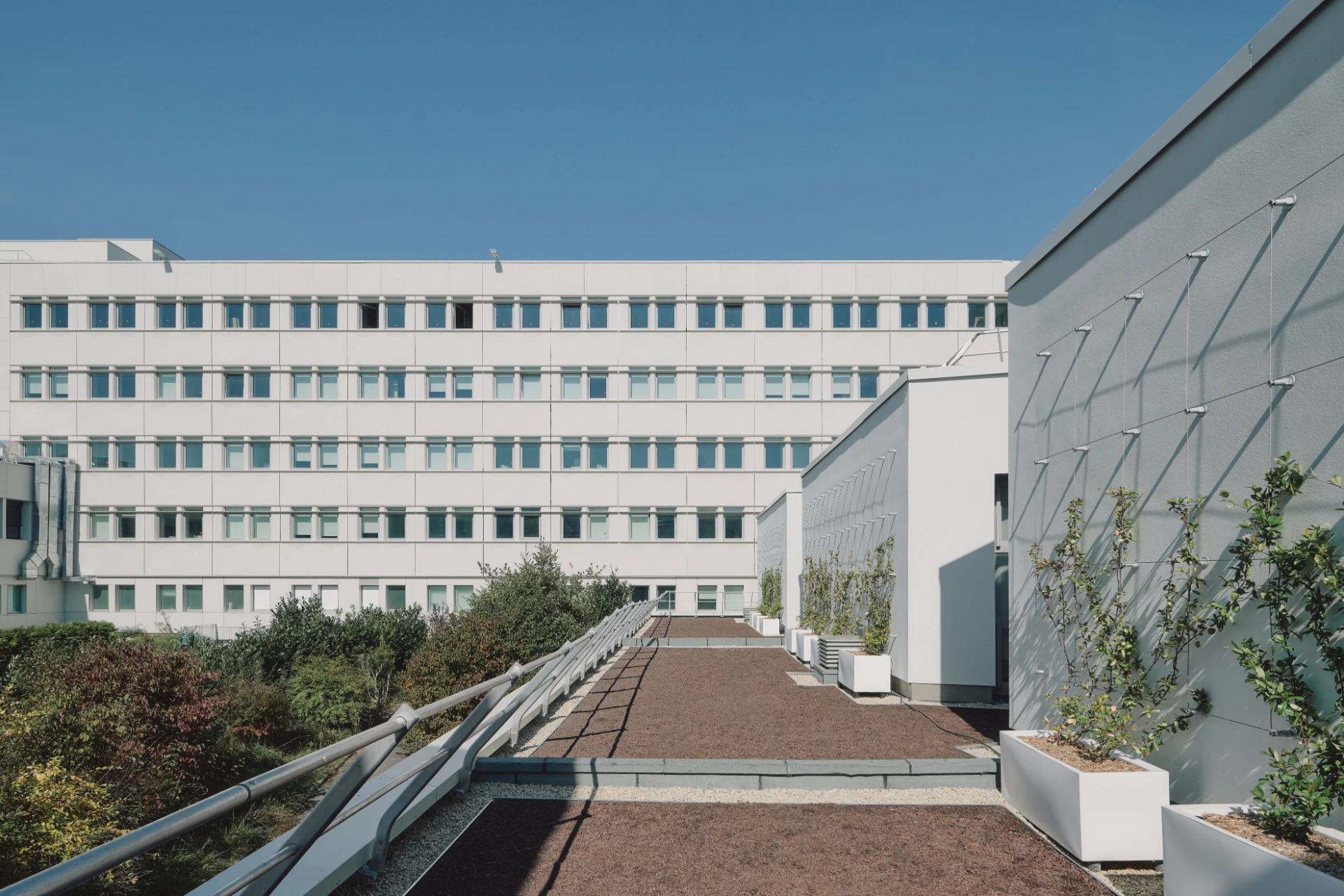
- Heavy external thermal insulation: installation of UHPC (ultra-high performance fiber-reinforced concrete) cladding
- Lightweight external thermal insulation: installation of metal cladding
- Internal thermal insulation: thermal lining
Each exterior facade was renovated gradually, section by section, over an eight-week construction cycle. The prefabricated fiber-reinforced concrete (FRC) cladding modules selected met the strict requirements for construction on an occupied site:
- Quick and easy attachment of prefabricated modules to the existing structure
- Limited work inside the premises
- Limited disruption (noise and dust)

Gallery
Our projects
.webp&w=2560&q=75)
Cardiff Innovation Campus
A university innovation campus fostering world-class research and local economic growth.

Chemistry Faculty of Ashgabat
Built in just 14 months, Ashgabat’s chemistry campus has 26 labs, housing for 644 students & facilities boosting Turkmenistan’s education.
Rennes Campus 2030
In Rennes, the thermal renovation of seven buildings at the University of Rennes, carried out while the site remained occupied, using an off-site construction process.
.webp&w=2560&q=75)
University Mohammed VI Polytechnic - UM6P
BYMARO has transformed Benguerir in partnership with UM6P: nine buildings covering 95,000 m² dedicated to teaching and research, catering for students and researchers.

Do you have a project?
Let's discuss it.