
From underground to organic market gardening: recycling excavated soil
Where Grand Paris Express worksites are concerned, Bouygues Travaux Publics Région Parisienne is seeking to give a new lease of life to excavated soil. A review of a circular-economy pilot project with the restructuring of an agricultural plot in partnership with the conurbation of Grand Paris Sud Seine-Essonne-Sénart and the municipality of Ris-Orangis.

Gender & urban planning: it’s time to get back to work
What if, beneath the apparent gender diversity, the playground reveals that urban space is far from egalitarian?
Towns and buildings desperately seeking biodiversity
UN experts have issued a chilling verdict: in cities and in the countryside, biodiversity is at death's door. The good news, as with climate change, is that it is not too late. Although natural areas remain the priority, urban planners and developers in the broad sense must learn to build, to rebuild cities and buildings that will let ecosystems flourish, where ecological continuity really comes into its own.
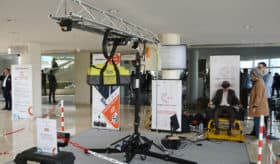
3 questions to Thomas Danel, a PhD student at Chaire Construction 4.0
Bouygues Construction and Centrale Lille formed Chaire Construction 4.0 in 2017. Its aim was to support the digitisation and industrialisation of the sector. Thomas Danel, a PhD student in this field, has been working on a prototype for a remote-controlled crane. He talked to us about his project.
Smiile, the revolution in inclusive refurbishment in the Smart City
Smiile is a way of pooling resources and neighbourhood networks on the scale of an apartment block, a neighbourhood or even a city. The solution is one of the services proposed in the WIZOM Réhabilitation 2018 offer by Bouygues Construction. It is a great example of the Group's collaboration with a ‘French tech’ start-up.
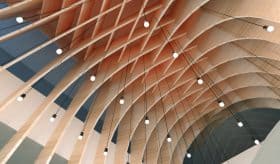
Be Issy: a convenient window onto the city
Whether reimagining the tripod shape to move proudly towards the traditional shape of the closed island, stepping back from the street , using curves to provide a maximum of natural light or working with materials to create pleasant, social spaces, the research and design work done here at Be Issy by the architects from PCA Stream is intended to improve the lives of the occupants.

LeanCo, the open innovation solution for democratising lean management
The Matching Up Challenge is back! This call for innovative projects ‘matches’ start-ups with Group employees. What's it like working with a start-up? Yolaine Perrot, Lean Management Director at Bouygues Construction and Xavier Motsch, the founder of LeanCo, tell us all about it.

Smart cities will have to be transparent and inclusive
More and more sensors and cameras are popping up in cities. So what is being done to protect people’s private lives?
Experiencing smart cities
Whether you call it a smart city, a connected city or, even better, a smart region, digitalisation is primarily all about improving and offering new services to citizens and then to the persons behind local policies in order to allow them to run the city more effectively.
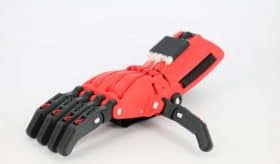
Living labs are good for your health!
Do-it-yourself projects are good for your health. Specifically, they can help improve the lives of patients. That is how living labs can help the medical field. These are “third places” dedicated to innovation. Their methodology brings together ordinary citizens, public and private actors, aiming to test services, tools, and new uses in real life.
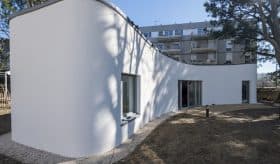
3D printing, a technology to serve humans and human art
With the aim of reducing occupational health risks on work sites, improving productivity and producing complex items, 3D printing, while still in its experimental stage, is taking the building sector into an industrialisation process that will result in some exceptional achievements. Technology to serve US, not vice-versa.

Interview of the month: Alain Hurel and Thomas Devallez
Alain Hurel and Thomas Devallez, the HR managers of the sea extension project in the port of Calais, share their experience with their joint job insertion efforts in the context of this construction site.
Medium-size cities: areas which stimulate the local economy
Do we necessarily need to live in a megacity to fully enjoy the modern economy?
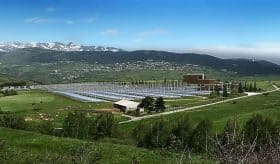
Solar thermal energy: a world first in France
In Llo, a town in the Pyrenees mountains, France just installed a thermodynamic solar power plant.
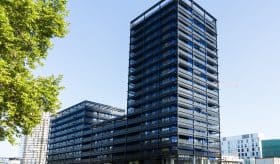
Anticipating in construction for reversible and sustainable buildings
This is an entirely new approach to construction, a more ethical and sustainable one. It involves predicting changes in usage, and the reversibility of a building after construction The aim is to be able to change the building's purpose easily to accompany changes in lifestyle and in the regions themselves.
Robotics and virtual reality used for health and safety
Improving working conditions on sites with a system combining robotics and virtual reality. This is far from a fairy tale - this research and development programme will come into effect in 2020. The aim is to train employees to pick up the right habits, via a process that is both visual and tactile.
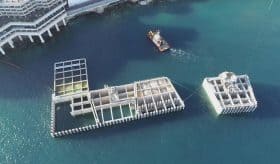
Monaco’s offshore extension: ecological engineering at the core of project design
Creating this 6-hectare offshore space between two reserves that are marine protected areas (the underwater reserve of Larvotto and the Spélugues coral reef), illustrates the particular care given to respecting the site’s biodiversity and attention paid to impacts arising from the worksite.
Interview of the month: Franck Moine
Franck Moine, CEO of Winnovation, tells us about this technology watch unit of the Bouygues Group
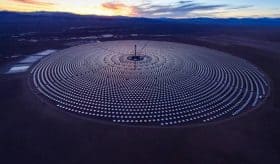
Morocco – future solar energy giant?
A few kilometres from Ouarzazate, in the heart of Morocco, is one of the world's five largest solar farms.
You will also like...
Top of the month
-
Seniors : offering intergenerational communal areas
(Français) Face à l’augmentation du nombre de seniors dans nos sociétés et à l’évolution de leur style de vie, il est nécessaire de repenser notre vision de l’habitat pour concevoir des logements qui répondent à leurs nouvelles attentes. Retrouvez les propositions de notre think tank, parrainé par le sociologue Serge Guérin, pour contribuer au bien vieillir à domicile.
-
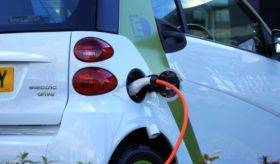
Will electrical cars be mandatory by the year 2030?
Are European car manufacturers poised to switch to all-electric? On 10 September, MEPs in Brussels gave their support for draft legislation setting a 45% reduction in CO2 emissions from cars and vans under 3.5 tonnes by the year 2030, with an intermediate target of 20% by 2025. A much more ambitious roadmap than that of the European Commission, which tabled plans for a 30% reduction by 2030.
-
Generative design: when AI designs our living spaces
What if tomorrow, our living spaces were designed to precisely match our needs based on the best possible layout—one created by a computer?
-
Interview of the month: Reda El Yakoubi
Reda El Yakoubi, Deputy Managing Director at Linkcity Morocco, tells us about his experience as a user of the serious game ‘Quartiers durables.Play’ for the Aéroplace à Casa Anfa project, the new urban centre in Casablanca.
-
Interview of the month: Alexandre Bouvry
Alexandre Bouvry, CATALPA Project Director at Bouygues Entreprises France-Europe, tells us about a sustainable wood-frame modular project that's being built for the French Defence Infrastructure Service.
-
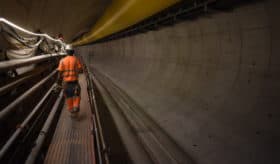
Mehdi Mahmoudysepehr: An engineer in Geomechanics and PhD student at Chaire Construction 4.0
‘To better understand and interpret the behaviour of tunnel boring machines in order to anticipate and solve technical problems within the industry is the subject of Mehdi Mahmoudysepehr’s doctoral research project. He is a PhD student at Chaire Construction 4.0. He tells us more about it below!
-
-
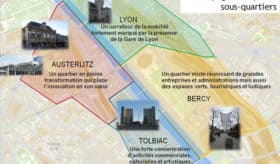
2 Rives, the circular-economy neighbourhood in Paris
When companies start pooling their efforts, sharing their tools and valuing their resources, does that create a circular economy?
-
Green spaces: a new criterion for the appeal of cities?
By 2050, almost 70% of the world's population will live in cities. But not just any old city, mind you! Cities offering a greener living environment are – and are set to become – increasingly popular. So, let's take a look at the issue of urban planning.