

Ker Study Residence
Ker Study Residence
Key facts
Location
France, PlouzanéProject owner
Linkcity
Client
Axentia
Architect
A3 Architectes
Contractor
Bouygues Bâtiment Grand Ouest
Only 16 months to complete a student residence
The housing supply at the Brest Iroise Technology Park was only able to meet 40% of the needs of students and young professionals. Faced with this situation, BMa (Brest Métropole Aménagement) called on Linkcity to build a new residence for students and young professionals.
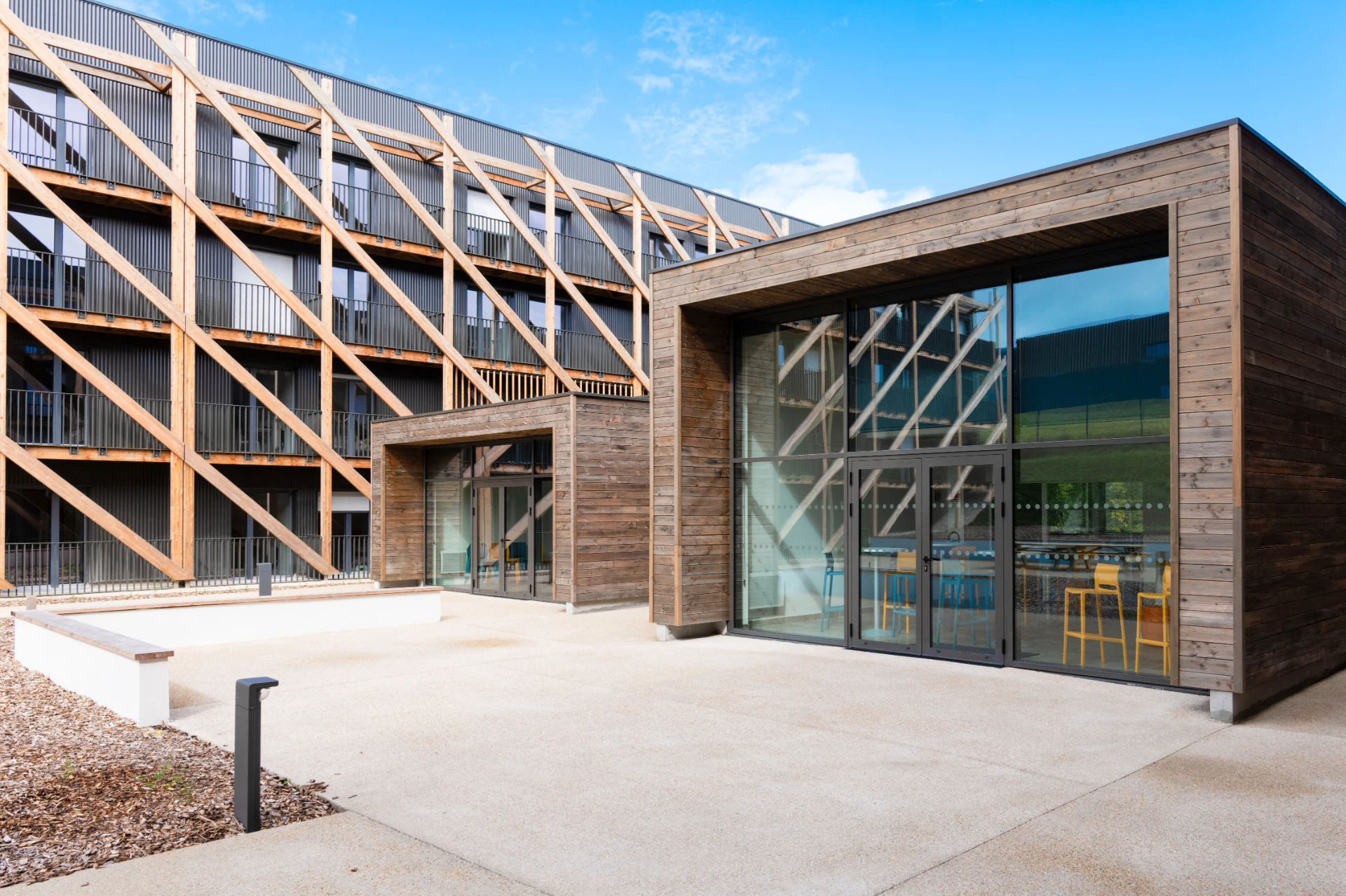
The Ker Study residence opened its doors in August 2025 for the start of the academic year, just 16 months after work began. The Brest-based teams at Bouygues Bâtiment Grand Ouest met this record deadline by implementing an industrialization process that favored the on-site assembly of prefabricated elements manufactured in the factory. This industrialization made it possible to:
- Reduce the construction time by six months
- Limit on-site disruption
- Decarbonize the construction process and comply with the 2025 carbon and energy thresholds (RE2020). The residence has also been awarded the Biosourcé level 1 label.
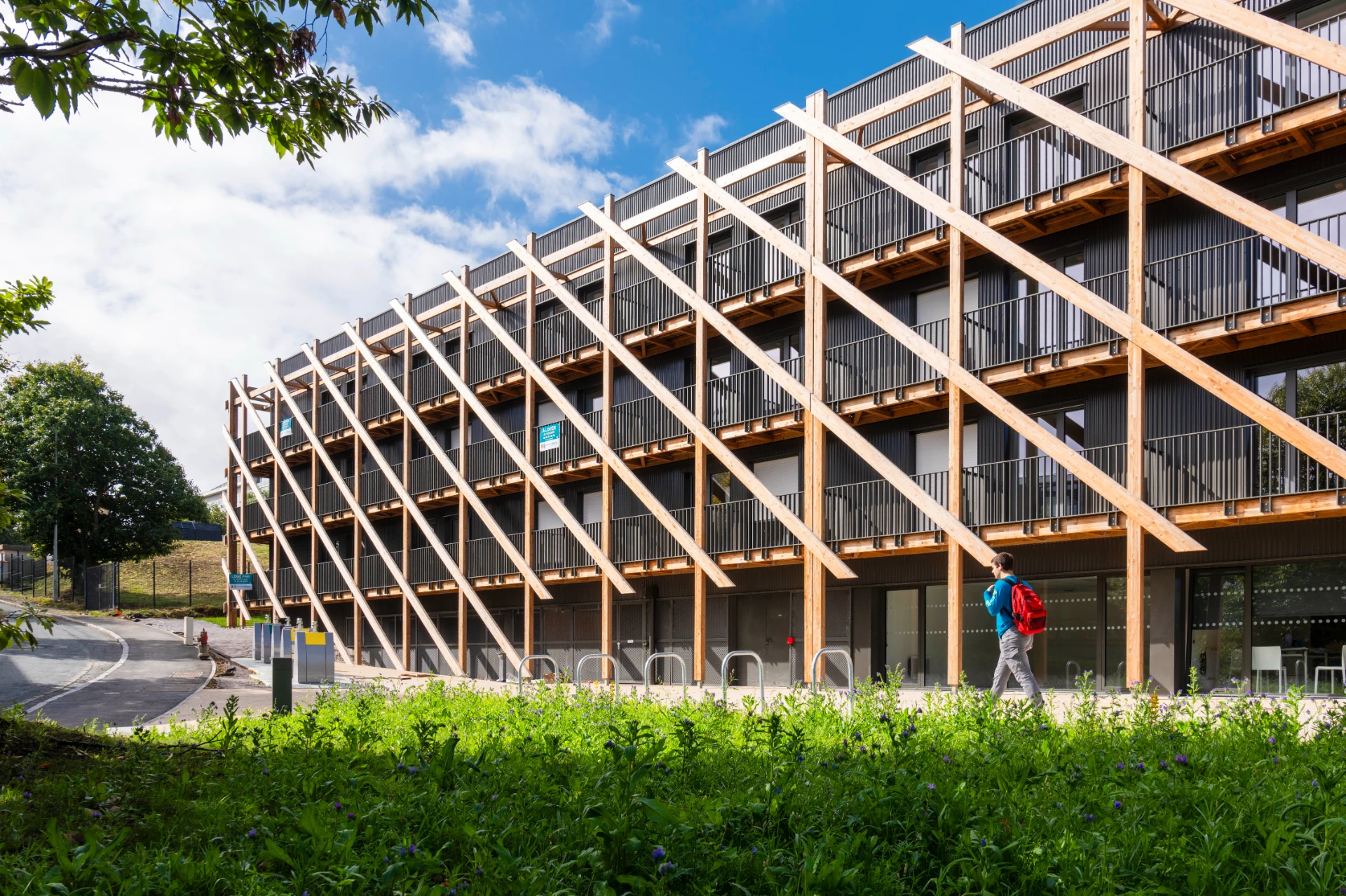
The residence comprises 207 studios, seven one-bedroom apartments, and six five-bedroom shared apartments, all with balconies. Shared spaces add to the comfort of residents: gym, cafeteria, laundry room, work and social areas (foosball, ping-pong, pétanque, etc.). Its architectural design was based on the idea of a natural central space open to the apartments and enhancing the existing site.
Key figures
- 244
- housing
- 5,000
- m² of total living space
- 2
- buildings
A residence with a strong commitment to the environment
This project is also committed to the BiodiverCity certification process, which aims to integrate biodiversity into the heart of construction projects. The residence is located within an exceptional pre-existing natural and vegetated setting that has been preserved and offers easy and immediate access to nature from the buildings, for the well-being of young residents and a pleasant living environment.
It incorporates various elements that promote local biodiversity:
- developments that favor wildlife, in particular ecological corridors, designed in advance of the construction project based on an ecological assessment of the site, which allow local wildlife to move around by connecting their different habitats. They thus contribute to their preservation.
- numerous and diverse green spaces, blending in with the Breton bocage landscape, shared gardens, and planting areas favoring native species
- existing embankments, sunken paths, and wooded areas are preserved and enhanced to create a natural and aesthetic setting that promotes spontaneous flora
- the creation of a semi-humid environment; Rainwater collection and management systems to cover irrigation needs, saving drinking water.
Gallery
Our projects

Bern 131
An administrative building in Bern featuring a timber frame made entirely from Swiss timber and numerous solar panels.
.webp&w=2560&q=75)
Castle Park View
Castle Park View, the tallest residential tower in Bristol, was designed and built by Bouygues UK.

Côté Parc
An intergenerational and sustainable neighbourhood, symbolising the urban regeneration of a district in Geneva.
.webp&w=2560&q=75)
François d'Assise Campus
A new, innovative, and sustainable 10,000-square-meter campus combining educational facilities and housing, built in 18 months using a wood-concrete structure and bio-based materials.

Hôtel Dieu
A vast mixed-use development covering 33,000 m², the Hôtel Dieu redevelopment program is part of the Rennes 2030 urban project.

Ker Study Residence
In Plouzané, a student residence with 244 units was built in just 16 months using prefabricated elements assembled in a factory.

L'Eveil de Flaubert
At Rouen in France, creaiton of an urban development program comprising 242 housing units (social, intermediate, first-time buyer, senior living), offices, shops, and services on a 1.6-hectare site, surrounding landscaped areas and a 625-space underground parking garage.

Quai 22
At Saint-André-lez-Lille in France, an urban project to redevelop an industrial wasteland into a mixed-use living space that recreates a direct link between the city and its canal.

Do you have a project?
Let's discuss it.