
Nîmes-Montpellier rail bypass
Nîmes-Montpellier rail bypass
Key facts
Location
France, NîmesDelivery
November 2017
Client
Réseau ferré de France Oc'Via
Contractor
Bouygues Travaux Publics
A major railway project for regional mobility
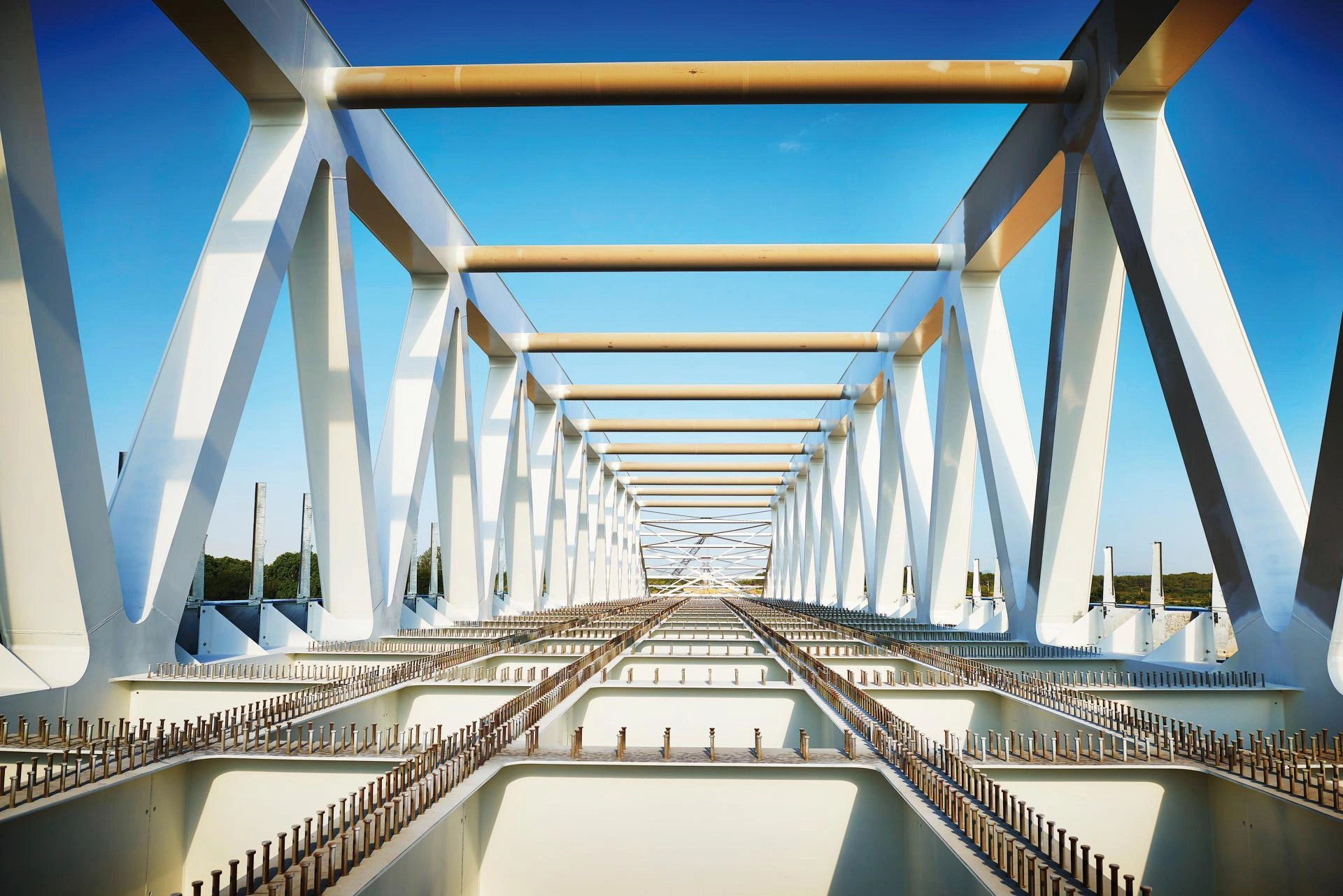
Considered one of France's largest railway projects, the Nîmes–Montpellier rail bypass has profoundly transformed regional and national mobility. Carried out as part of a public-private partnership, this large-scale project includes the design, financing, construction and maintenance of 80 kilometres of mixed-use railway track, including 60 kilometres of high-speed line between Manduel and Lattes. This new route offers an efficient alternative for passenger and freight traffic, relieving congestion at the existing rail hub in the heart of the conurbation and improving traffic flow throughout the south of France.
With 183 bridges, massive earthworks involving up to 300 machines, embankments up to 12 metres high and up to 1,100 employees mobilised during peak periods, the Nîmes–Montpellier rail bypass has established itself as a key project for the attractiveness of the region and the efficiency of international rail transport.

Key figures
- 5 M
- m³ of earthworks
- 80
- km of new track
- 183
- bridges
- 13
- viaducts
An infrastructure designed to blend into the landscape
From the outset, the Nîmes–Montpellier rail bypass route was designed to meet the challenges of a sensitive natural environment that is highly prone to flooding. Crossing wetlands and waterways, the project required the creation of imposing embankments and engineering structures designed to ensure optimal hydraulic transparency. Particular attention was paid to preserving biodiversity: ecological corridors, heritage species preservation areas and an environmental observatory were incorporated to limit the impact of the construction site on the natural environment. In order to reduce dust dispersion, the teams adopted controlled watering techniques adapted to the strong winds in the Gard region. The Nîmes–Montpellier rail bypass thus exemplifies an approach where technical excellence and environmental responsibility go hand in hand.
Gallery

Our projects

Gautrain Rapid Rail System
Design, construction and operation of an 80-km rapid rail line, delivered in time for the 2010 FIFA World Cup and recognised for its environmental performance.

High Speed 2 (HS2)
Between London and Birmingham, as part of the Align consortium, we built 21.6 km of infrastructure, including a 16 km twin-bore tunnel and a 3.4 km viaduct.
Nîmes-Montpellier rail bypass
Construction of 80 km of new track, including 60 km of high-speed track and 183 bridges. A public-private partnership.

Rhine-Rhône high-speed rail
A key infrastructure project, the Rhine–Rhône high-speed rail line connects regions and improves their accessibility thanks to 140 km of new track, 29.1 km of which were built by Bouygues Travaux Publics.