
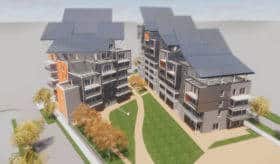
4 innovative uses of BIM. Episode 2: The ABC EcoCité Grenoble demonstrator
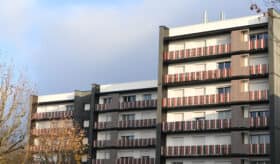
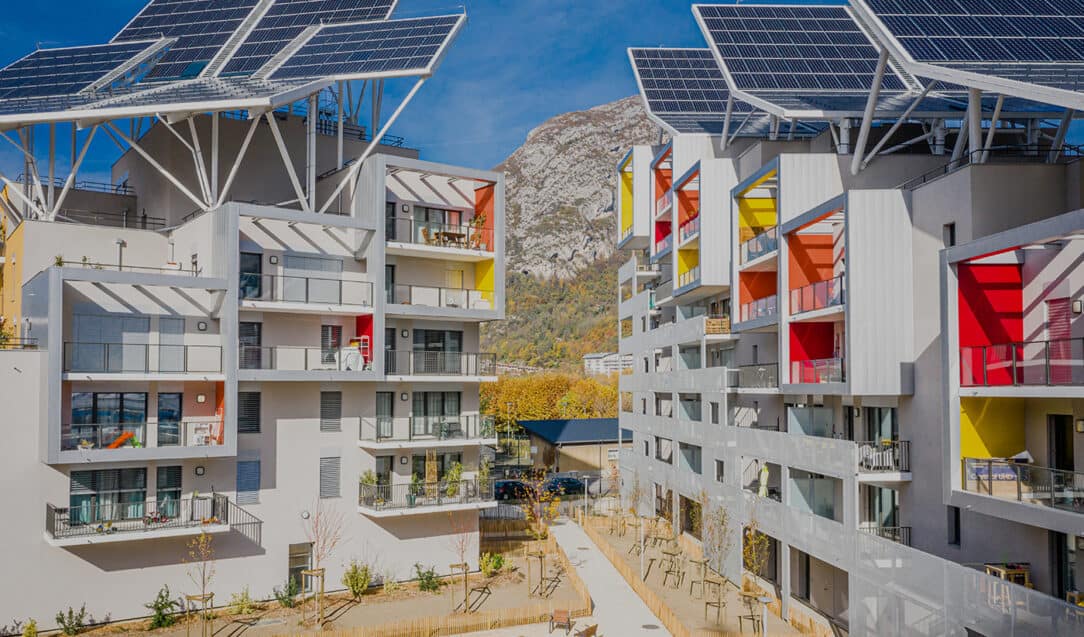
Sharing information so that all project stakeholders have the same view of the project. Welcome to the BIM era! Every week for a month, you can learn about one project where BIM is being used innovatively. Today we are looking at the ABC demonstrator in Grenoble, by Linkcity Sud-Est.
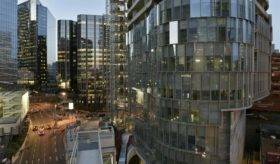
4 innovative uses of BIM. Episode 1: The Alto Tower, the prowess of BIM!
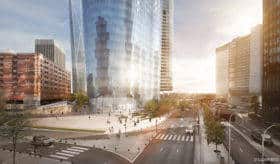
Sharing information so that all the players in a project have a shared vision of the works. Welcome to the world of BIM! Every week for a month, discover one of our sites where BIM is being used in an innovative way. Today we discover the Alto Tower by Bouygues Bâtiment Ile-de-France.
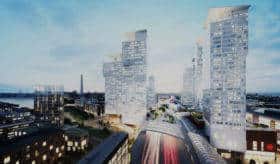
In Helsinki, the “participatory” smart city
"The most functional smart city in the world. " Helsinki's ambition is a mighty one... but has real potential. The Finnish capital wants to align new technologies with usages suited to the lives of its residents.
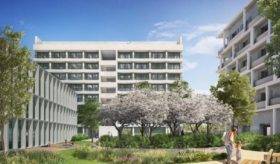
A new Health & Prevention space
Take advantage of the Smart City Congress in Barcelona and discover the solutions offered by Linkcity, real estate subsidiary of Bouygues Construction, for a city that is smarter and more efficient with regard to health.

Will electrical cars be mandatory by the year 2030?
Are European car manufacturers poised to switch to all-electric? On 10 September, MEPs in Brussels gave their support for draft legislation setting a 45% reduction in CO2 emissions from cars and vans under 3.5 tonnes by the year 2030, with an intermediate target of 20% by 2025. A much more ambitious roadmap than that of the European Commission, which tabled plans for a 30% reduction by 2030.

Interview of the month : Frédéric Gérard
Frédéric Gérard, the director of the 5G SmartX business accelerator at Bouygues Telecom, discusses the context for this initiative and his vision for the Group.
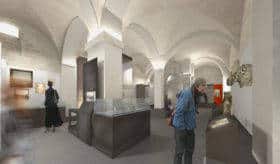
Renovation of the Carnavalet museum – History of Paris: one of the greatest cultural construction sites of Paris
This is the oldest museum in Paris, and also the biggest culturally significant construction project currently under way. The Carnavalet museum – History of Paris will reopen in late 2019-early 2020 after major renovations, some of which are being performed by Ouvrages Publics (Bouygues Bâtiment Ile-de-France, a subsidiary of Bouygues Construction). Worksite visit.
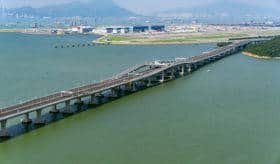
Hong Kong-Zhuhai-Macau: a bridge over the Pacific
The longest sea bridge in the world. After nine years of construction, the Hong Kong-Zhuhai-Macau bridge was officially opened today.
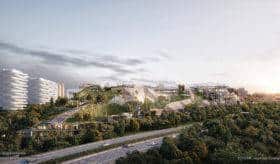
When termites inspire the future of the construction industry
Nature provides an endless source of inspiration. Observing nature to inspire technological innovation is the very essence of biomimicry.
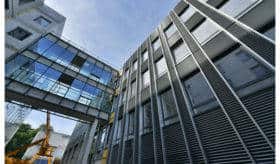
Pierrick Beillevaire reinvents university life on the tertre campus
The 19th, 20th and 21st of October are the days of architecture. For the occasion, Pierrick Beillevaire, founder of the architectural firm In Situ, shares with us his vision of architectural writing combined with the comfort of use. Winner of the Design, Build, Operate, Operate and Maintain (CREM) competition for the rehabilitation of the Tertre building at the University of Nantes, these choices have made it possible to make this campus an open space overlooking the city and a comfortable environment for a student life conducive to work.
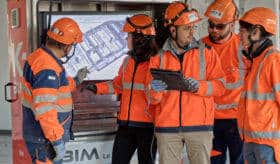
Using innovation on construction sites
Now more than ever, Bouygues Construction uses shared innovation to keep making its construction sites safer and more efficient.

Interview of the month: Aude Launay
Aude Launay, an intrapreneur supported by the Bouygues Group, talks us through the Flexy Moov concept.
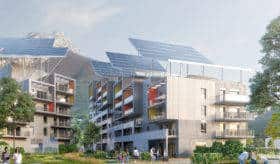
The ABC concept: architecture that promotes community living
ABC came from Bouygues Construction Research and Development, in partnership with Valode & Pistre architects. It aims to promote self-sufficiency in water and energy, and seeks to optimise waste disposal. We met with Denis Valode, co-founder of Valode & Pistre architects.

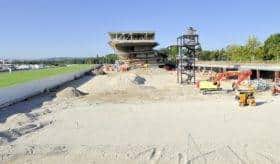
The circular economy: at the heart of Bouygues Construction’s strategic thinking
Transforming waste into resources: when the circular economy disrupts our growth models and the way we consume and produce goods. Bouygues Construction is fully committed to acting as a responsible and committed industry player.

Cities and mobility reinventing proximity
Towns and cities are forged in the crucible of multiple communities and usage patterns, and grow with them. In this way, inhabitants build a future as they take control of their daily lives.
The modular approach: delivering the Alpha City student residence on time!
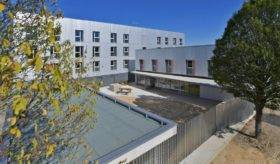
A mere seven months after its construction started, the Alpha City residence in La Roche-sur-Yon has been delivered in time for the start of the new 2018-19 academic year! In order to meet the tight deadlines for this building, which was constructed using the Wizom Connected system, the group implemented an industrial wooden module construction procedure.

Why Bouygues Construction is investing in vocal assistance
Find out why Bouygues Construction is getting closely involved, in particular by investing in the startup Simsoft Industry.

Interview of the month: Thiebault Clément
Thiebault Clément, Research and Development Manager at Bouygues Construction shares his vision.

You will also like...
Top of the month
-
Transforming a street with a brushstroke: what does the future hold for tactical urbanism?
During 2020, the term 'tactical urbanism' suddenly appeared on the front pages of the press to describe the arrangements being tested in the face of the COVID-19 crisis: pop-up ‘corona cycle lanes’ marked out in yellow on the streets or temporary terraces for restaurants and cafés instead of parking bays, for example. Light, low-cost, temporary and sometimes transitional, tactical urbanism has many advantages in the face of crisis. Do these facilities point to more permanent developments? How do you transition smoothly between two views of a street or a square? What are the social and cultural issues at stake, and what are the impacts in terms of use? What initiatives can come from the inhabitants of an area?
-
Will the new silk road change the world?
Since 2013, China’s Belt & Road Initiative (BRI), also referred to as the New Silk Road, has been building a network to connect China with the rest of the world, with railways, highways, ports, airports, industrial areas, data centres and telecommunication networks. As part of this strategy, China has been financing and building infrastructures in a number of third-world countries in Asia, as well as Africa, the Middle East, Latin America and Europe. Is this New Silk Road about to change the world? Will it be open to everyone or under Chinese control? Is there a place for Europe? Below we consider three fictional and highly distinct scenarios in order to explore various possible futures, some frightening, some fascinating.
-
-
The construction material that reacts with CO2
In our town and cities, where vegetation is becoming increasingly scarce, how can we absorb carbon dioxide, claimed by scientists to be the number one cause of climate change? Imagine a material that could grow like trees by absorbing carbon dioxide!
-
Smart homes: the latest on “intelligent” housing
Whether in the interests of comfortable living or to reduce energy consumption in homes, connectivity is increasingly present both in individual housing and multi-unit buildings. An advantageous transformation that might well lead to the embedding of certain technologies in all new housing.
-
Alto, a one-of-a-kind tower
The Tour Alto is one of many prestigious high-rise buildings erected in La Défense and in other French cities.
-
[Panorama Sustainable Cities] #5 Pontevedra, the car-free city
The city of Pontevedra has adopted a mobility strategy that has brought the use of cars down to the bare minimum. As a result, traffic and pollution levels have dropped dramatically, inhabitants enjoy a new sense of well-being, and the city centre has been given an economic boost.
-
Wizom for Life: Bouygues Construction launches its adaptable housing offer
After "Wizom Connected", Bouygues Construction's connected housing solution, the group is now launching an adaptable housing offer called "Wizom for Life". Presented during a trade show for mayors from the Paris region, it rounds out the Wizom housing offer and paves the way for a more flexible and modular home.
-
The ABC concept: architecture that promotes community living
ABC came from Bouygues Construction Research and Development, in partnership with Valode & Pistre architects. It aims to promote self-sufficiency in water and energy, and seeks to optimise waste disposal. We met with Denis Valode, co-founder of Valode & Pistre architects.